Workflow
Interior Designer Process: From Meeting Note to Order List
A full view of the Liru workflow from notes and briefs to products, decisions, budget, shopping, and orders.
A full view of the Liru workflow from notes and briefs to products, decisions, budget, shopping, and orders.
Interior design work is made of many small decisions. A client chooses a variant, comments on a product, accepts a room direction, changes a budget assumption, or asks for a different supplier. Each of those moments matters because it changes what the designer should do next.
The problem starts when those decisions live outside the project. A message in an inbox, a note from a call, or a comment in a PDF may be clear on the day it appears. Two weeks later it is much harder to know which room, product, version, and budget it referred to.
What has to stay clear
- Meeting notes and project brief.
- Room requirements and style direction.
- Product choices and concept presentation.
- Client decisions, budget, shopping list, and orders.
These points should not be reconstructed from memory. They should be part of the project record, visible next to the material, product, presentation, room, and budget affected by the choice.
A better workflow
The decision should be made where the context already exists. If the client is comparing products, the choice should stay attached to the products. If they are reviewing a room, the comment should stay attached to that room. If the decision changes the budget, the budget should update from the same source instead of becoming a separate manual task.
This gives the designer a cleaner workflow. There is less searching through messages, fewer unclear approvals, and fewer moments where someone has to ask, "which option did we mean?"
How Liru supports it
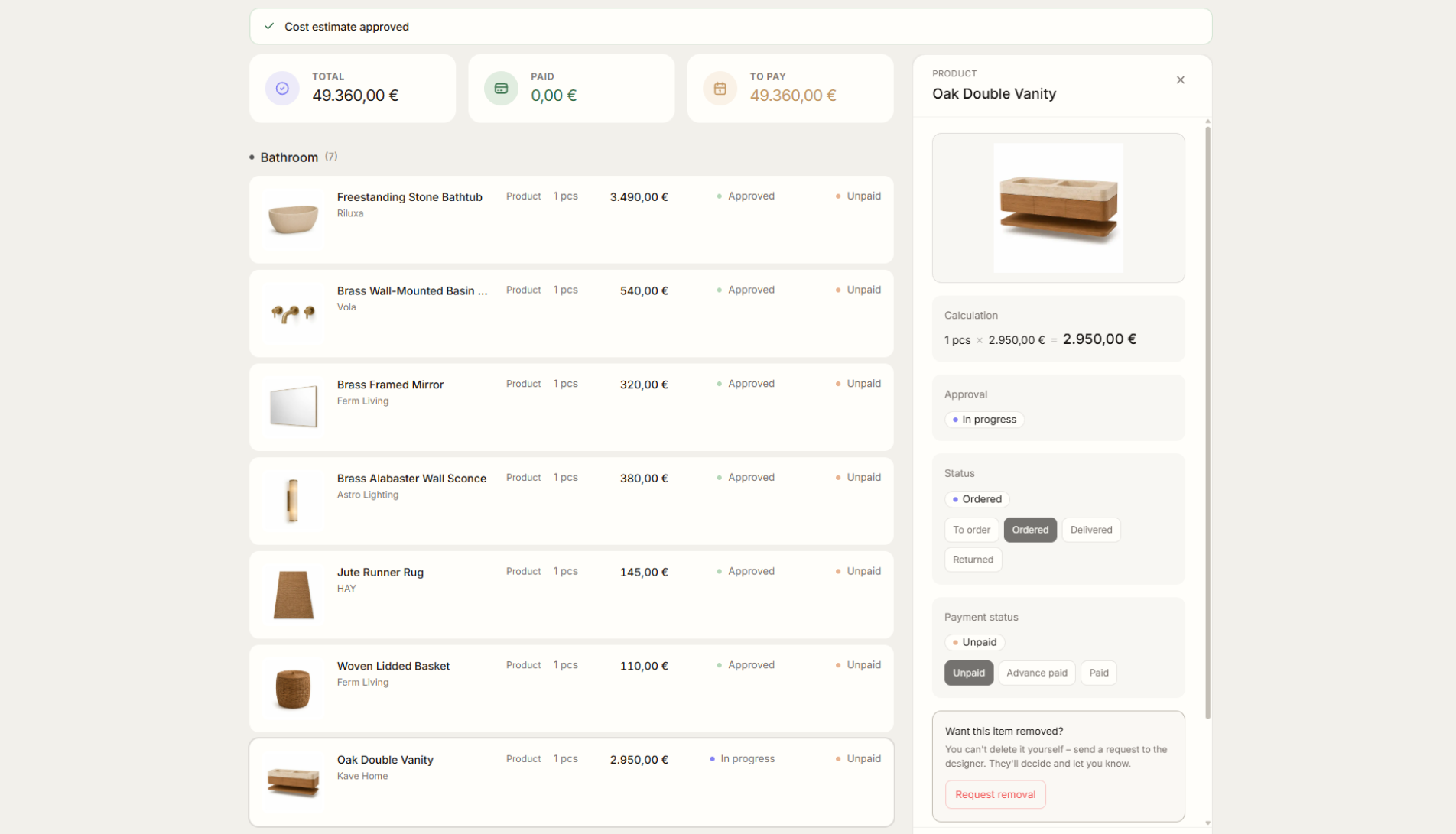
Liru keeps the project, products, client decisions, budget, and next steps in one workspace. The client reviews the project in context, and every choice can be connected to the element it concerns. The designer sees what was accepted, what still needs a decision, and what should happen next.
See the full workflow in an example project.
Ready to try a better workflow?
Sign up